Runtime Variants
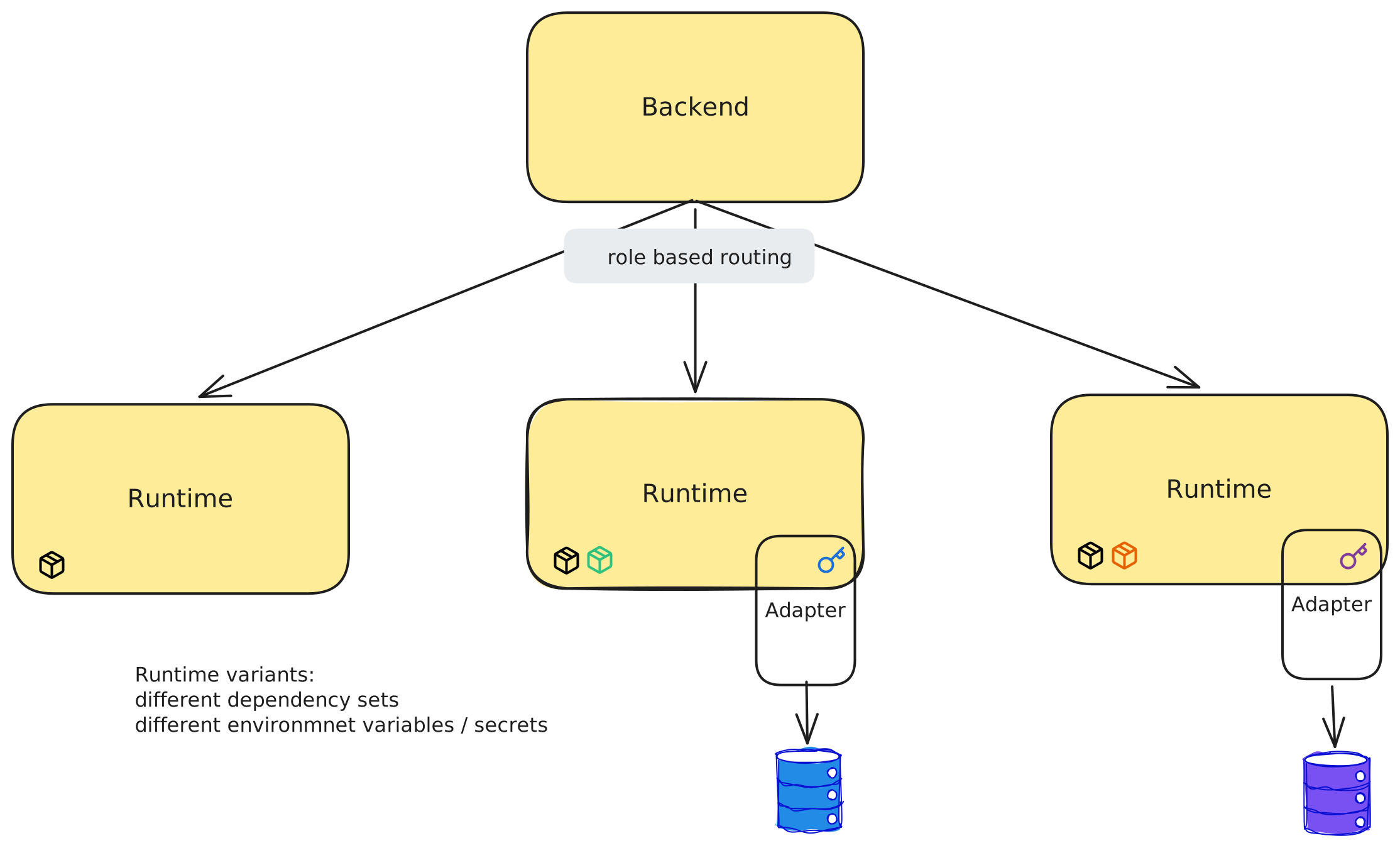
Using HD_AUTH_RUNTIME_ENGINE_URL_BY_ROLE, you can employ different runtime service deployments, e.g. with varying runtime docker image and environment variables. Which runtime service variant is invoked depends on a role in the bearer token provided with the execution request, i.e dispatching/routing depends on a claim in the token.
This can be used to have runtime deployments varying for example in
- installed Python dependencies
- available environment variables, in particular credentials
Info
You may also be interested in Trafo Restricted Execution Services, which is a way to set up separate backend services that only offer execution restricted to only a fixed set of transformations.
Usage Examples
Managing privileged access to external systems
As an example, executions triggered by a more privileged (service) user may be routed/dispatched to a runtime deployment with additional credentials. These credentals can then be used by a component adapter source component or a general custom adapter to access an external system that ordinary users should not have access to.
Note
Generic Rest Adapters will use the bearer access token if auth is configured appropriately, so their access can be managed directly by the adapter's webservice.
Resource Management
In some cases, resource intensive or high-priority executions should happen in another runtime deployment which may run on special cluster nodes. Consider e.g. access to GPUs or resource-intensive model training.
Configuration
Authentication must be active.
The HD_AUTH_RUNTIME_ENGINE_URL_BY_ROLE environment variable for the backend is configured with a json object mapping role strings to runtime service urls, e.g.
If no matching role is found in the token as configured by HD_AUTH_ROLE_KEY, the backend falls back to calling the default runtime service configured via HETIDA_DESIGNER_RUNTIME_ENGINE_URL.
Warning
So if using this mechanism to manage privileged access to resources, make sure HETIDA_DESIGNER_RUNTIME_ENGINE_URL points to the runtime service with the fewest privileges.
See config.py, especially the description of auth_runtime_engine_url_by_role for details.